Multimedia Challenge: Comics
Final Design Documentation
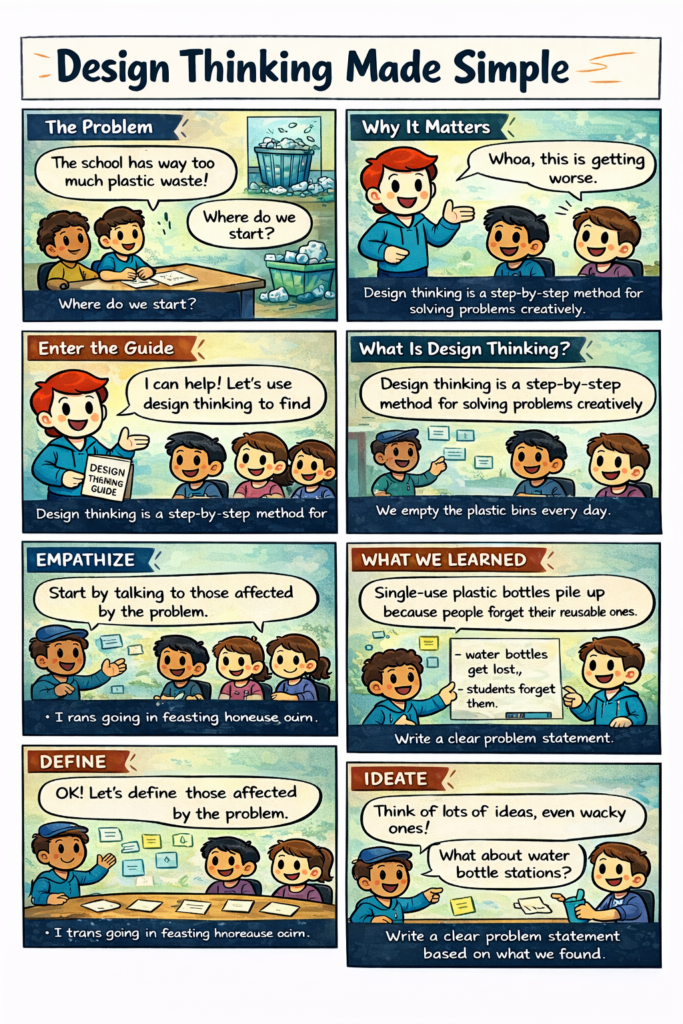
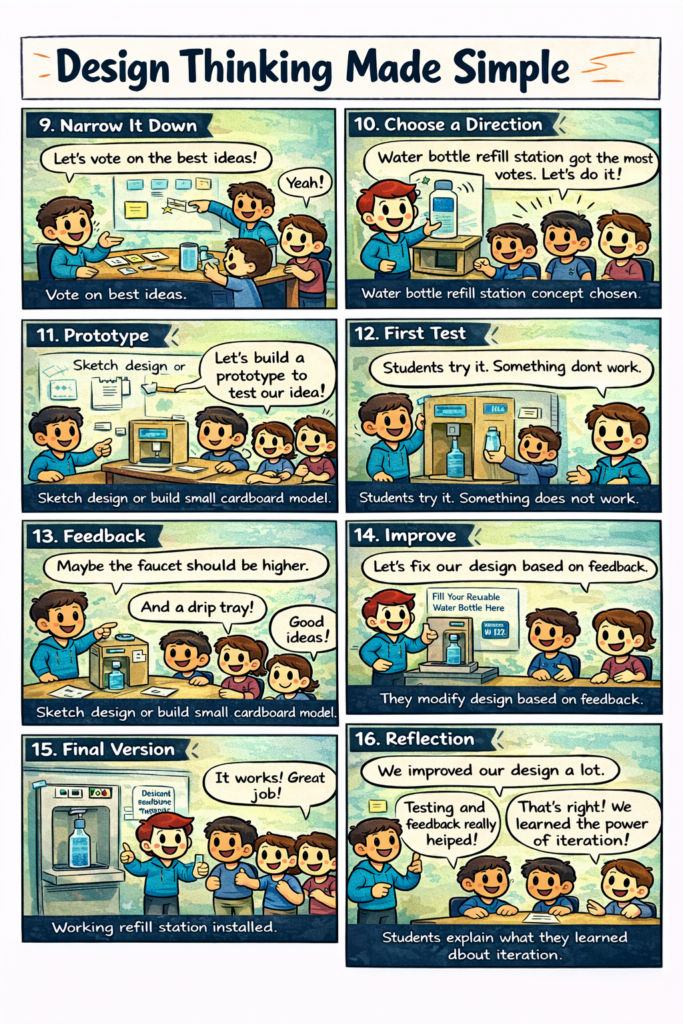
Designed using Canva AI based on my original stickman drawings and details panel descriptions.
Project Overview
For this project I created a comic titled Design Thinking Made Simple using the help of Canva AI. The goal of my comic was to teach the design thinking process in a way that feels realistic and relatable. Instead of explaining the stages in a textbook style, I wanted to show students using the process to solve a real problem. The issue I focused on was plastic waste at school caused by single use water bottles. This made the learning feel easier to connect to.
The comic follows a group of students as they move through the stages of design thinking, from noticing a problem to reflecting on what they learned. My main objective was not just to show the steps, but to emphasize iteration and improvement.
Design Process
At the beginning of the comic, students notice overflowing garbage bins filled with plastic bottles. I chose to visually show the problem first, so readers immediately understand why it matters. Rather than jumping straight to a solution, a guide introduces design thinking as a structured way to approach the issue.
During the empathize stage, the students interview classmates and staff. This shows that good solutions begin with understanding people. Through these conversations, the characters realize that many students forget their reusable bottles or lose them. That helps them define a clearer and more focused problem statement about reducing single use plastic bottles at school.
In the ideation stage, the students brainstorm multiple ideas and then vote to narrow them down. The refill station concept is chosen after discussion, which shows a lot of collaboration and decision making. They then move into prototyping by building a simple cardboard model. I intentionally showed that the first version was not perfect. During testing, the faucet height and lack of a drip tray create issues. Feedback from other students leads directly to improvements. The final refill station works better because of that feedback, reinforcing that design thinking is iterative.
Visual and Educational Choices
I used Canva to add visual contrast between the messy overflowing bins at the beginning and the clean working station at the end to show progress. Dialogue is short to keep pacing clear and reduce overload. Each stage is labeled so the reader can follow the process easily, but the story still flows naturally.
The comic format allowed me to combine text and image to show learning in action. Instead of just defining iteration, readers see it happen through testing and revision.
Prototype Feedback and Revision
Peer feedback helped me strengthen the final version. One important suggestion was to clarify the intended audience. In my prototype, the audience felt too broad. I refined it to focus on learners who are new to design thinking, which makes the purpose clearer. I also changed the problem because my original prototype felt very “dry” I wasn’t able to think if any other way to add more panels to make the comic make sense to the readers.
Another suggestion was to think more carefully about cognitive overload and how the student’s frustration connects to it. In the final version, I made the stages more clearly segmented and ensured each panel focused on one idea at a time. This helps the information build gradually instead of overwhelming the reader.
I also reflected on character development. While the comic remains educational, I paid closer attention to expressions and emotional shifts, so the process feels more human. The feedback helped me make the project more focused on the subject.
Reflection
Through creating this comic, I noticed that design thinking is not just a set of steps, but a mindset focused on improvement. The process of building the prototype and revising it helped me better understand iteration myself. If I continued developing this project, I would expand the empathy stage further to include more perspectives. I believe this comic project teaches me both the structure of design thinking and the importance of testing and refining ideas.