Multimedia Critique Assignment
Introduction
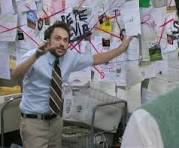
Image found from YouTube
Educational multimedia can either help people learn or make learning harder when it’s poorly designed. The Pepe Silvia meme shows someone trying to make sense of a confusing mess of information, which works as a good metaphor for cognitive overload. In this critique, I use learning theory to look at how different multimedia resources are designed and how those design choices affect understanding, engagement, and accessibility. To do this, I created my own assessment rubric based on multimedia learning theory, active learning models, and Universal Design for Learning (UDL), and then used it to evaluate three educational resources of different quality.
Assessment Rubric
Rubric Rationale
This rubric is based on learning theories we covered in class. Mayer’s theory explains that people take in visual and verbal information separately and can only handle so much at once, so the way multimedia is designed really matters for avoiding overload (Mayer, 2009). Active learning focuses on the idea that students learn better when they are doing something like interacting with content or exploring ideas instead of just watching or listening (Freeman, 2014). Universal Design for Learning is about making learning more accessible by giving students different ways to access information, stay engaged and show what they understand (CAST, 2018).
These ideas were used to turn learning theory into clear and practical criteria that can be used to evaluate different educational multimedia resources.
Assessment Rubric
| Criterion | 0–2 (Needs Additional Work) | 3 (Marginally Meets Expectations) | 4 (Fully Meets Expectations) | 5 (Exceeds Expectations) |
|---|---|---|---|---|
| Theoretical Foundation | Based on personal preference, no theory referenced. | Mentions learning theory superficially. | Explicitly aligned with multimedia learning, active learning, and UDL. | Demonstrates deep theoretical understanding and explains why design choices affect learning. |
| Multimedia Design Quality | Poor integration of visuals/audio, high cognitive load. | Multimedia present but inconsistently applied. | Multimedia supports comprehension and reduces cognitive load. | Multimedia design is highly intentional and optimizes learning. |
| Active Learning & Engagement | Entirely passive, no interaction. | Minimal learner interaction. | Learners actively manipulate or apply content. | High learner agency, reflection, and problem solving. |
| Accessibility & UDL | Accessibility ignored, single mode of delivery. | Limited accessibility features. | Multiple representations and engagement options provided. | Proactively inclusive design with high flexibility. |
Selected Educational Resources
Three real educational multimedia resources were selected to represent a clear spectrum of quality:
- Poor Quality Resource: Traditional lecture-style YouTube video
- Okay Quality Resource: PhET Interactive Simulations
- Excellent Quality Resource: BioInteractive
Evaluation of Resources
1. Poor-Quality Resource: Traditional Lecture-Style Video
Resource Link:
🔗 Physics – Basic Introduction (YouTube)
Description:
This video consists of a static lecture presentation with narrated explanations and minimal visual signaling. Learners passively watch without opportunities for interaction.
Evaluation Scores:
- Theoretical Foundation: 1/5
- Multimedia Design Quality: 2/5
- Active Learning & Engagement: 1/5
- Accessibility & UDL: 1/5
Justification:
This resource breaks a lot of the main ideas behind good multimedia learning. It has a lot of talking and text-heavy slides, which can overload the learner instead of helping them connect the ideas (Mayer, 2009). There is also no interaction, so students are basically just sitting and watching, which goes against active learning research showing that lecture only learning is usually less effective (Freeman, 2014). Accessibility is also pretty weak because captions and other options are limited or missing. Overall, it feels like the Pepe Silvia meme because the information is messy and overwhelming, which makes it harder to understand what is going on.
2. Okay-Quality Resource: PhET Interactive Simulations
Resource Links:
🔗 PhET Interactive Simulations
🔗 PhET YouTube Channel

Description:
PhET provides interactive math and science simulations that allow learners to manipulate variables and observe outcomes in real time.
Evaluation Scores:
- Theoretical Foundation: 4/5
- Multimedia Design Quality: 4/5
- Active Learning & Engagement: 4/5
- Accessibility & UDL: 3/5
Justification:
PhET simulations match active learning really well because they let students experiment, test ideas and explore concepts instead of just watching something (Perkins, 2006). The graphs, animations, and sliders also help connect what learners are seeing with what they are learning, which goes well with Mayer’s multimedia learning principles. With that said, the accessibility is not always consistent across every simulation and some could be difficult for learners who use screen readers or have trouble with fine motor movements. In my opinion, PhET is a strong, research based resource that supports learning well, but it could do better in terms of universal accessibility.
3. Excellent-Quality Resource: HHMI BioInteractive
Resource Link:
🔗 Biointeractive

Description:
HHMI BioInteractive is a free learning website made by the Howard Hughes Medical Institute. It has biology and life science resources like interactive simulations, short videos, animations, data activities and virtual labs. The materials are meant for high school and university level students, and they focus on learning through inquiry and evidence.
Evaluation Scores:
- Theoretical Foundation: 5/5
- Multimedia Design Quality: 5/5
- Active Learning & Engagement: 5/5
- Accessibility & UDL: 4/5
Justification:
HHMI BioInteractive is a really strong example of good multimedia learning design. It put together visuals, narration, animations, and interactive parts in a way that helps students understand the concepts without overwhelming them, which matches multimedia learning theory (Mayer, 2009). A lot of the activities also make students work with real data, make predictions and test ideas, which fits well with active learning. The platform supports Universal Design for Learning by giving students different ways to learn the same content, like videos, text and interactives. It usually includes captions and transcripts, but it could still improve by adding more options for customization and accessibility.
Conclusion
This multimedia critique shows how learning theories can be turned into a practical tool for evaluating educational resources. The rubric clearly separates low quality, average, and high quality resources by looking at how well they follow learning theory, how engaging they are, and how accessible they are. Comparing the three resources also shows how good multimedia design can take learning from confusing and overwhelming, like the Pepe Silvia meme, to something that is organized, interactive, and easier for more people to learn from.
References
CAST. (2018). Universal Design for Learning Guidelines version 2.2. https://udlguidelines.cast.org
Freeman S, Eddy S. L, McDonough M, et al. (2014). Active learning increases student performance in science, engineering, and mathematics. Proceedings of the National Academy of Sciences, 111(23), 8410–8415. https://www.pnas.org/doi/10.1073/pnas.1319030111
Mayer, R. E. (2009). Multimedia learning (2nd ed.). Cambridge University Press. https://www.cambridge.org/core/books/multimedia-learning/7A62F072A71289E1E262980CB026A3F9
Perkins K, Adams W, Dubson M, et al. (2006). PhET: Interactive simulations for teaching and learning physics. The Physics Teacher, 44(1), 18–23. https://pubs.aip.org/aapt/pte/article-abstract/44/1/18/274167/PhET-Interactive-Simulations-for-Teaching-and?redirectedFrom=fulltext